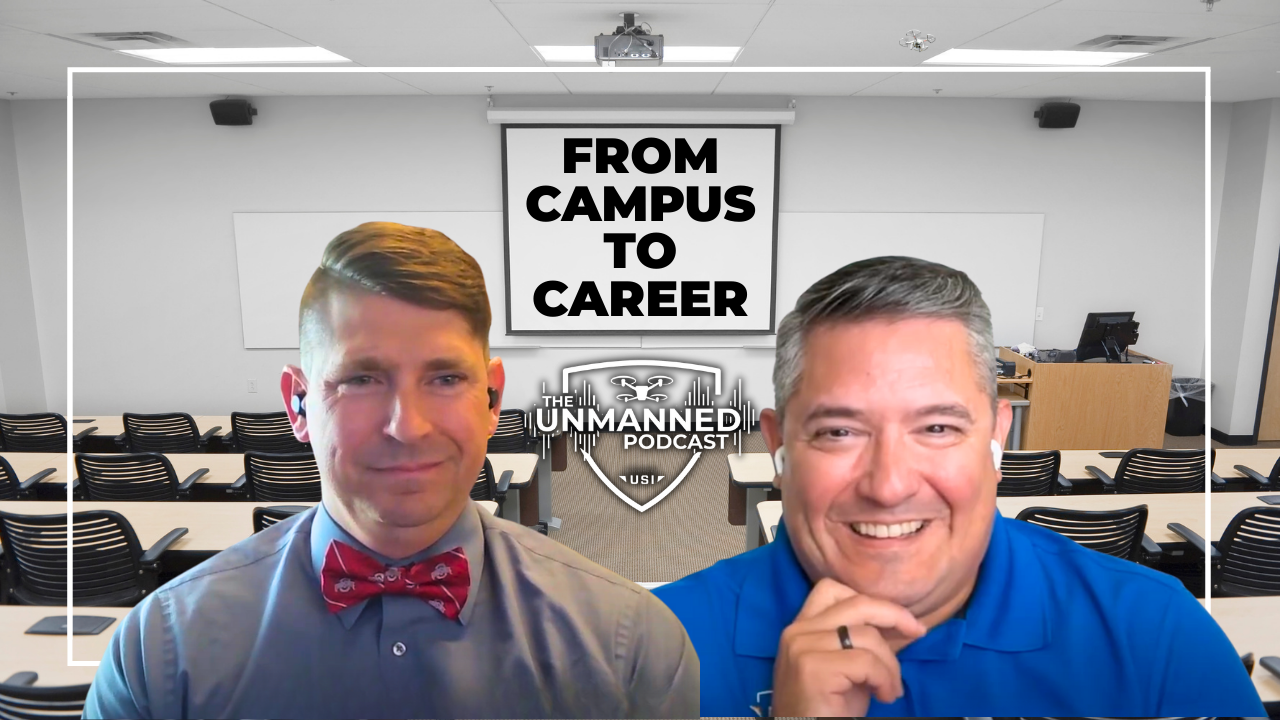
In Episode 7 of The Unmanned Podcast, host Matt Hernandez sits down with Chris Strasbaugh, Director of Learning Technologies at The Ohio State University. Chris shares his unexpected path into the drone space, starting as an archivist and photographer before being asked to learn how to fly a drone for research purposes. That single request led to eight years of growth, supporting mapping and research across the university and ultimately helping build a formal drone education program that now serves multiple colleges and disciplines.
Q1: How did you get started in drone education at The Ohio State University?
Chris:
My background actually wasn’t in aviation or engineering. I was an archivist and photographer when a faculty member asked if I could take photos from above using a drone. That simple request pulled me into the drone space. Over time, mapping, research support, and safety needs grew across the university, which led to building a formal drone education program that now supports multiple disciplines.
Q2: How is drone education evolving at the post-secondary level?
Chris:
Drone education has expanded well beyond aviation-only programs. At Ohio State, we focus on a drone plus approach, adding drone skills to existing majors. Instead of limiting drones to pilots, we integrate them into agriculture, engineering, computer science, environmental studies, and other fields. The goal is to make drone education accessible through minors, certifications, and general education courses like Part 107.
Q3: Why is it important to prepare students for autonomy and not just manual flight?
Chris:
Teaching only manual flight limits long-term career readiness. The future of drones is largely autonomous. Students need to understand mission planning, autonomy, airspace integration, and how crewed and uncrewed aircraft will operate together. Even for those who enjoy flying manually, autonomy will impact nearly every role in the industry.
Q4: How do certifications and industry partnerships help make students job-ready?
Chris:
Passing Part 107 alone does not mean someone is ready for real-world operations. Certifications like USI’s help validate practical skills, safety knowledge, and hands-on experience. They also reduce uncertainty for employers by clearly showing what a student knows and can do. Industry partnerships, internships, and demo days further connect education to real operations.
Q5: What changes would you like to see in drone education over the next few years?
Chris:
Two major factors will shape the future. The first is clarity around Part 108. The second is access to affordable, non-Chinese aircraft for training. Advanced operations will define how students are prepared long term, and consistent access to reliable platforms is essential for building workforce-ready programs.
Want more insights from industry experts?
Subscribe to The Unmanned Podcast and never miss an episode where we break down the latest in drone technology, regulations, and commercial operations.
Click Below to Watch the Full Episode