
Your roadmap from first flight to full-scale program

Building a Drone Operation that Lasts

The industry is booming—and confusing. This guide distills what actually matters so you can run a professional operation: safely, legally, and with staying power.

Your roadmap from first flight to full-scale program

Building a Drone Operation that Lasts

The industry is booming—and confusing.  New technologies, expanding use cases, and evolving regulations are creating enormous opportunities for individuals and organizations. This guide distills what actually matters so you can run a professional operation: safely, legally, and with staying power.

Why This Guide

New tech, new use cases, and shifting rules create opportunity—and noise. After helping thousands of pilots and organizations, USI’s message is simple: flying legally is the floor; flying professionally is the goal. The difference is purpose, discipline, and a program that can stand up to real-world pressure.

At USI, we specialize in helping operators go beyond Part 107—bridging the gap between minimum regulatory compliance and true professional competency.

Whether you’re launching a drone business from scratch or elevating an existing program, we’ll show you how to start strong, grow intentionally, and stay ahead of the curve.

So You Want to Start a Drone Company?


Imagine this
: You’ve just seen a drone zip over a construction site, capturing progress photos with pinpoint precision. Or perhaps you saw breathtaking aerial footage online and thought, “I could do that.” You’re not alone. Many enter the drone space inspired by the power of perspective—and driven by the promise of opportunity. But inspiration isn’t a strategy. To turn that passion into a real operation, you need more than a drone and a dream.

The journey begins with purpose. Ask yourself: What problem do I want to solve with drones? Aerial photography for real estate listings? Inspections for utilities or infrastructure? Agricultural crop analysis? Your answer defines your path.

Inspiration isn’t a strategy. Start by naming the problem you’ll solve—progress photos, utility inspections, campus mapping, crop analysis. Your mission decides your aircraft, your skills, and your procedures.

Next, earn your Part 107 and go beyond test prep. Learn to read airspace like a map of your business, interpret weather that actually changes your plan, and apply risk controls you’ll rely on when the plan breaks.

Going beyond 107 means building technical fluency, operational discipline, and risk awareness that Part 107 alone does not provide. It means preparing for real-world complexity, not just a written exam.

Then build your “invisible” infrastructure: flight logs, maintenance tracking, and simple SOPs. It’s the difference between a lucky flight and a professional operation.

Don’t underestimate the power of standards at this stage. Aligning early with ASTM F3266 (an internationally recognized training standard that outlines what professional drone pilots should know and be able to do on a global scale) or F38.03 principles provides a foundation that will scale with you, helping avoid rework later when operations mature.

Equipment matters—but only in service of the mission. Choose purpose-built platforms and the software that supports planning, logging, and safety. Add capability as your use cases grow.

Start your operation the right way:

  • Define your mission

  • Get certified

  • Build foundational knowledge (not just “tips and tricks”)

  • Select purpose-built equipment and tools

  • Embrace risk management as your standard—not an afterthought

Skills like Crew Resource Management (CRM), Human Factors awareness, and structured decision-making are essential as you transition from individual pilot to team leader. These are rarely covered in basic training but are critical for safety and repeatability. This is the essence of going beyond 107—developing the competencies that allow you to lead operations, not just participate in them.

Knowledge doesn't stop with the test.


Becoming a professional operator means learning how to:

  • Interpret aeronautical charts and weather data
  • Plan safe, legal missions
  • Log your flights, track maintenance, and monitor performance
  • Understand and manage risk
hardhat-2-1

Growing from Pilot to Program


Maybe you’ve already cleared the first hurdle. You’ve earned your Part 107, purchased equipment, and started booking jobs or flying for your organization. But now, things are getting more complex. You’re flying at multiple sites. You’re hiring staff or coordinating with departments. You’re tracking deliverables, clients, and compliance. It’s time to grow—but how do you grow safely?

Complexity is the sign you’re succeeding: multiple sites, more people, tighter timelines, bigger clients. What separates a busy pilot from a durable program is structure, and that structure lives in a General Operations Manual (GOM).

A good GOM isn’t paperwork—it’s a memory you can share. It tells a new hire how to prepare a site, what “go/no-go” means here, who to call in an emergency, and how we decide when to stand down. It makes your operation repeatable, trainable, and defensible.  It allows you to bring on new personnel with clarity and confidence. It gives clients and regulators peace of mind. Most importantly, it helps you sleep at night.

A GOM aligned with ASTM and SMS principles also simplifies compliance as regulatory frameworks evolve. This is especially true as the FAA moves toward 14 CFR Part 108 for BVLOS and more complex operations. Preparing for that transition means embracing the mindset and methods required to operate beyond 107.
 

our-story

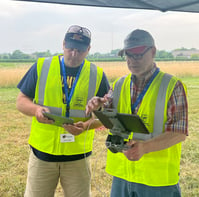
Imagine this scenario: A crew member has a mid-flight emergency while you’re off-site. What do they do? Who do they call? Where’s the checklist? With a GOM, those answers are documented and accessible. Without one, you’re relying on memory and hope.


What the GOM Covers — at a Glance

Roles and responsibilities; flight procedures and emergency actions; training and currency; maintenance and configuration control; data handling and privacy; and the Safety Management System that ties it all together.

USI provides templates aligned with ASTM F3266—a widely accepted U.S. standard for remote pilot training that emphasizes safety, flight proficiency, and professional conduct so you’re not starting from a blank page.

Navigating the Regulatory Horizon
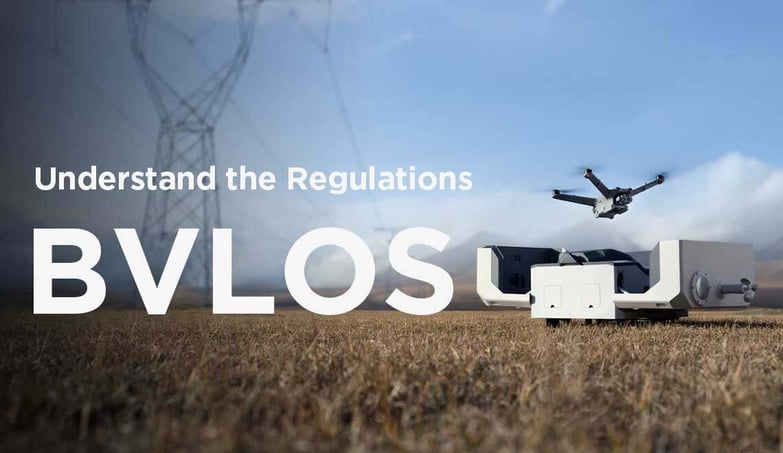
Rules evolve. Part 107 waivers and emerging frameworks (e.g., standards-based BVLOS) raise the bar for competence and documentation. The way through isn’t prediction—it’s preparation.

Stay ahead: Track updates, stay active in the community, and—most importantly—run an SMS that finds hazards before they find you. The same habits that keep you safe today prepare you to adopt tomorrow’s approvals.

Safety Management Systems aren’t just for large enterprises. Even small teams benefit from lightweight SMS structures that support consistent hazard identification, risk assessment, and performance monitoring. SMS is the infrastructure that turns compliance into culture. And it's a core feature of operations that go beyond 107.

USI’s SMS tools and training packages can be customized for teams of any size—and implemented in phases to meet your readiness level.

A Practical Way to Stay Ahead

  Listen — FAA/ASTM updates, industry working groups.
  Translate — turn changes into SOP and training updates.
  Prove — logs, currency, maintenance, and SMS evidence.
  Adopt — expand capabilities when your program is ready.

Download our latest whitepaper:

"The Business of Safety"

It explores how investing in standards-based operations produces a measurable return on investment and lays the groundwork for BVLOS readiness. These are the pathways available to operators who choose to go beyond Part 107.


hardhat-3

From First Flight to Full-Scale

Whether you’re launching a one-person operation or growing a fleet of certified pilots, your success comes down to preparation, mindset, and support. At USI, we believe in empowering professionals—not just passing pilots. Through trusted training, compliance tools, and real-world expertise, we help you build an operation that lasts.

Going beyond 107 is more than a tagline—it's a transformation. From foundational safety to advanced flight operations, our programs are designed to elevate skills, boost confidence, and unlock opportunities in a rapidly growing industry.

Explore free templates, courses, and resources at FlyUSI.org.

Let’s build the future of aviation—safely, together.

Ready to Build Your Operation?

Explore training, grab templates, and get expert support from USI.

Explore USI Programs