Regulatory updates, Part 108 insights, expert analysis, podcasts, whitepapers, and industry events—delivered to your inbox.
auto_stories2026 Guide • Updated September 25, 2026
Get FAA Part 108 Ready: The ultimate guide to BVLOS rules, status and readiness
Part 108 is the FAA’s proposed rule for routine beyond-visual-line-of-sight (BVLOS) drone operations — and it is not in effect yet. This guide tracks where the rule stands today, explains what the proposal would change and how it differs from Part 107, and shows what pilots and organizations can responsibly do now to prepare.
editBy USI Editorial Teamfact_checkReviewed by Russ Winslowcalendar_todayPublished September 25, 2025verifiedStatus verified
verifiedLast verified
radarLive Part 108 tracker
Where Part 108 stands today
A dated record of the rulemaking, checked against primary sources. Current law, proposed provisions and unknowns are labeled separately so the proposal is never mistaken for the law.
hourglass_topUnder reviewPart 108 status: Final rule under federal review
The FAA’s proposed Part 108 framework is not yet in effect. The final FAA rule is currently under federal review at the White House Office of Information and Regulatory Affairs (OIRA), which received it on July 10, 2026. Until new requirements take effect, organizations must continue to use existing FAA pathways for BVLOS authority.
FAA and TSA publish the Part 108 proposed rule (NPRM)
expand_moreDetails, source & what it means
The FAA and TSA jointly published the proposed rule Normalizing Unmanned Aircraft Systems Beyond Visual Line of Sight Operations (90 FR 38212, Docket FAA-2025-1908). It proposed a new 14 CFR Part 108 for routine BVLOS operations, a new Part 146 for automated data service providers, and TSA security requirements. It followed Executive Order 14307 (June 6, 2025) and the FAA Reauthorization Act of 2024.
What this means
This is the proposal, not the law. Every Part 108 figure cited today — permits, certificates, weight limits, roles — comes from this NPRM and may change in the final rule.
The 60-day comment period closed on October 6, 2025, after the FAA and TSA declined requests to extend it on September 29. The FAA later reported approximately 3,100 comments and said more than half addressed the proposed right-of-way rules.
What this means
Public input is now part of the record the FAA must consider. The most debated topics — especially right-of-way and electronic conspicuity — are the most likely to change.
FAA reopens comments on right-of-way and electronic conspicuity
expand_moreDetails, source & what it means
After heavy comment and two January 6 listening sessions, the FAA reopened the docket for 14 days on two limited topics: electronic conspicuity and the proposed right-of-way rules. On February 10 it denied a request to extend the reopened period, which closed February 11, 2026.
What this means
Right-of-way between drones and crewed aircraft — and the devices that make aircraft electronically visible — remained open questions late in the process. Read the final rule’s treatment of both closely.
The White House Office of Information and Regulatory Affairs (OIRA) received the FAA’s final rule (RIN 2120-AL82) for review under Executive Order 12866. The final text has not been released.
What this means
The FAA has finished drafting its final rule, but it is not law yet. Review can lead to changes before publication, so the final requirements are still unknown.
OIRA lists the final rule as pending review and has held meetings with outside parties on it through at least September 22, 2026. TSA says it is finalizing its companion security requirements in coordination with the FAA; on September 4, 2026 it invited BVLOS operators to request seats (by October 19, 2026) at closed technical roundtables to be held after the final rules publish.
What this means
No publication date has been announced. Executive Order 12866 generally allows OIRA up to 90 days for review, with possible extensions, and the end of review does not itself set a publication date. Plan on existing BVLOS pathways for now.
When the final rule is published in the Federal Register, its text becomes public and official. It may differ materially from the 2025 proposal. USI will update this guide’s status, quick answers, and comparisons when it publishes.
What this means
Publication is when the final requirements become known — not necessarily when they apply. Watch for the effective date and any phased compliance dates in the rule.
The final rule will state when Part 108 takes effect and whether specific requirements phase in later. The 2025 proposal did not propose a specific effective date. Transition timing for existing waivers, exemptions, and Part 135 BVLOS operations will also come from the final rule.
What this means
Until the rule takes effect, current FAA BVLOS pathways continue to apply.
Guide rebuilt as a live Part 108 tracker; status verified
USI’s Part 108 guidance now lives in one continuously updated reference with a dated status, primary sources, and this change log. Sources checked: OIRA (final rule pending review), the Federal Register (no final rule), and the eCFR (no Part 108).
TSA confirmed it is finalizing companion security requirements with the FAA. Roundtables on model security-program language will follow publication of the final rules; requests to participate are due October 19, 2026.
Get an email when the tracker records a material change — like publication of the final rule, effective dates, or new FAA guidance. Tracker updates only; no sales inquiry needed.
Current + proposedQuick answers
Part 108 quick answers
Direct answers to the questions people are asking right now, each linked to the deeper explanation below. Status-dependent answers were last checked September 25, 2026.
menu_bookWhat is FAA Part 108?add
FAA Part 108 is a proposed federal regulation (14 CFR Part 108) that would create a standard way to authorize routine beyond-visual-line-of-sight (BVLOS) drone operations. Instead of case-by-case waivers, operators would obtain an FAA operating permit or certificate and meet requirements for aircraft, personnel, procedures, and supporting services. The FAA and TSA proposed it in August 2025.
No. Part 108 is not in effect. The FAA’s final rule went to the White House Office of Information and Regulatory Affairs (OIRA) for review on July 10, 2026, and has not been published. Until the final rule is published and its requirements take effect, BVLOS flights still require existing FAA waivers, exemptions, or other authorizations.
No effective date has been announced. The final rule must first complete OIRA review and be published in the Federal Register; the published rule will then set its effective date and any phased compliance dates. An earlier executive-order target for the final rule has already passed, so treat any predicted date with caution.
No. Part 107 would remain the framework for visual-line-of-sight operations with small drones under 55 pounds. Part 108 would be a separate rule for routine BVLOS operations. As proposed, BVLOS would move out of Part 107: once Part 108 takes effect, BVLOS would be conducted under Part 108 rather than through Part 107 waivers.
groupsCan an individual or small business operate under Part 108?add
Yes, as proposed. Part 108 centers on the operator’s responsibility, but an operator can be a company or an individual. Small businesses could seek permits sized to lower-risk operations, and the proposal includes a recreational permit for an individual flying one aircraft BVLOS. Every operator would still need aircraft with FAA airworthiness acceptance and must stay within the authorization’s limits.
Not as proposed. The NPRM would not require an FAA airman or remote pilot certificate for Part 108 roles such as operations supervisor or flight coordinator. Instead, the operator would qualify its people through training on FAA-specified subject areas, repeated every 24 calendar months. A Part 107 certificate remains required for Part 107 operations.
Yes, but only with FAA authorization. Under current law, BVLOS generally requires a Part 107 waiver of the visual-line-of-sight rule, a Section 44807 exemption, a Part 135 certificate for drone delivery, or — for government agencies — a public aircraft COA or waiver. A Part 107 certificate alone does not permit BVLOS flight.
checklistWhat should organizations do now to prepare?add
Start with one high-value BVLOS use case and build the program around it: assign safety and operational accountability, define roles and training, document operations, maintenance, emergency, and security procedures, and confirm your aircraft and systems fit the mission. Keep flying under current authorizations while you prepare, and adjust once the final rule is published.
edit_noteProposedgavelCurrent law noted where it applies
Part 108 in plain English
Today, flying a drone beyond visual line of sight means asking the FAA for permission case by case. Part 108 proposes to replace that with a repeatable, rules-based framework: an operator earns a permit or certificate once, then flies routine BVLOS missions within its limits.
What is BVLOS?
BVLOS (beyond visual line of sight) means flying a drone when no one on the crew can keep it in unaided sight. Under Part 107, the remote pilot or a visual observer must be able to see the aircraft throughout the flight (14 CFR 107.31), so BVLOS currently needs a waiver or other FAA authorization. BVLOS is what makes long corridor inspections, remote “drone-in-a-box” dispatch and delivery networks practical at scale — which is why a standard rule matters.
From one-off approvals to an operating framework
The FAA and TSA published the proposal — formally, Normalizing Unmanned Aircraft Systems Beyond Visual Line of Sight Operations — on August 7, 2025 (90 FR 38212). It would add a new 14 CFR Part 108 for BVLOS operations of aircraft up to 1,320 pounds, a new Part 146 for the automated data services that support them, and TSA security requirements.
The proposal anticipates highly automated operations: aircraft would fly on automated flight controls — the FAA says direct manual control with handheld joysticks would not be permitted — while trained people supervise. Instead of resting on one certificated pilot, responsibility is distributed across the whole system:
corporate_fare
The operator
The person or organization holding the permit or certificate. It answers for the whole operation, with an operations supervisor as final authority for safe and secure flight.
precision_manufacturing
Aircraft design
Manufacturers would declare compliance with FAA-accepted consensus standards, and each aircraft would need FAA airworthiness acceptance.
groups
Personnel
Operations supervisors, flight coordinators, maintenance and support roles — trained by the operator on FAA-specified subjects, with no FAA airman certificate proposed.
menu_book
Procedures
A company operations manual, recordkeeping and reporting, maintenance, emergency and security procedures — plus risk assessments and a safety management system for certificate holders.
hub
Supporting services
Strategic deconfliction and conformance monitoring from automated data service providers certificated under proposed Part 146 — or provided by the operator itself.
shield_lock
Security
TSA security threat assessments for covered personnel and, for package delivery, a TSA security program. TSA says its final requirements are still being completed.
gavelCurrent lawToday
personA remote pilot (Part 107) or operator identifies a BVLOS mission
descriptionApplies for a waiver, exemption or COA for that operation
hourglass_topFAA reviews the safety case case by case
location_onApproval is limited to the conditions and locations granted
arrow_forwardWaivers → permits & certificates
edit_noteProposedUnder Part 108
corporate_fareAn operator builds a documented BVLOS program
badgeObtains an operating permit (lower risk) or certificate (higher risk)
repeatFlies routine BVLOS within the authorization’s limits
trending_upScales people, aircraft and locations under one framework
Today → Part 108 future state. The left column describes current law; the right column describes the 2025 proposal, which may change in the final rule.
Key terms, defined consistently
Part 108
The FAA’s proposed rule (14 CFR Part 108) for routine BVLOS operations. Proposed Aug. 7, 2025; not yet in effect.
BVLOS
Beyond visual line of sight: flight where the crew cannot keep the aircraft in unaided view.
Operator
The person or organization that holds a Part 108 permit or certificate and is accountable for the operation.
Operating permit
Proposed authorization for eight defined, lower-risk operation types with fixed limits; valid 24 months.
Operating certificate
Proposed authorization for higher-risk or larger operations, with a training program, safety management system and more FAA oversight.
Operations supervisor
The person with final authority for the safe and secure operation of the aircraft under their purview — comparable, the FAA says, to a director of operations.
Flight coordinator
A person who monitors an aircraft in flight and can control it, issue commands or initiate emergency actions. Required when the manufacturer’s instructions call for one.
Detect and avoid (DAA)
The capability to detect other aircraft and hazards and maneuver to avoid them.
Command and control (C2) link
The data link between the control station and the aircraft; the proposal requires coverage, monitoring and lost-link procedures.
UTM and automated data services
Networked services — such as strategic deconfliction and conformance monitoring — that help drones share intent and stay on plan. Providers would be certificated under proposed Part 146.
Population density category
One of five proposed categories, based on LandScan USA population data, that set where and how an operation may fly.
Electronic conspicuity
Equipment, such as ADS-B Out, that broadcasts an aircraft’s position so others — including drones — can detect it.
Watch: Part 108 Explained
USI’s overview of what the Part 108 proposal means for organizations and the future of drone operations.
For where the rule stands today, the tracker above is the dated, source-checked reference.
Current + proposed
gavelPart 107: current lawedit_notePart 108: proposed
Part 107 vs. proposed Part 108
Part 108 would not replace Part 107. Part 107 stays the rule for visual-line-of-sight flying with small drones; Part 108 would add a separate, operator-centered framework for routine BVLOS. As proposed, BVLOS would move out of Part 107 once Part 108 takes effect.
Part 107 (current law) compared with the Part 108 proposal (NPRM, Aug. 7, 2025). Part 108 entries may change in the final rule.
Topic
Part 107 today Current law
Proposed Part 108 Proposed
Primary model
VLOS operations (§ 107.31)
Routine BVLOS operations
Accountability
Remote pilot in command
Operating organization — the “operator,” which can be a company or an individual — with an operations supervisor as final authority
Authorization
Remote Pilot Certificate + applicable waivers
Operating permit or certificate
Aircraft
Small UAS under 55 lb
Operation-dependent; potentially up to 1,320 lb Most permit types cap at 55 or 110 lb (§§ 108.440–108.475, 108.805)
Human role
Active pilot control
Supervision of highly automated systems No handheld manual flight control
Primary roles
Remote pilot / visual observer
Operations supervisor / flight coordinator + support roles
Personnel credential
FAA remote pilot certificate (aeronautical knowledge test)
No FAA airman certificate; operator-provided training on FAA-specified subjects, recurrent every 24 calendar months
Scale
Typically one aircraft and localized missions
Potential fleet and one-to-many operations 1:1 by default; higher ratios with an FAA-acceptable method, capped by the manufacturer (§ 108.210)
info
Your Part 107 certificate still matters
Part 107 remains the path for VLOS commercial work and the foundation most drone careers start from. Many people will work under both rules: Part 107 for VLOS jobs, and inside an operator’s Part 108 program for BVLOS work.
Proposed
edit_noteProposed
Who Part 108 applies to
Not every drone operator will need Part 108. It is aimed at people and organizations that conduct — or plan to conduct — routine BVLOS operations, and at the companies that build aircraft and services for them.
1
Are you conducting — or planning — routine BVLOS operations?
blockNo: Part 107 (or the recreational flyer rules) continues to cover visual-line-of-sight flying. Part 108 would not change that.
check_circleYes: go to question 2.
2
Are you a government agency flying as a public aircraft?
check_circleYes: you can keep operating under public aircraft rules and your COA. Part 108’s proposed civic-interest option is written for civil operators contracted to a government.
arrow_downwardNo: go to question 3.
3
Is the flying recreational, or commercial?
sports_esportsRecreational: a proposed recreational permit would allow one aircraft BVLOS, up to 55 lb, in lower-density areas.
workCommercial: a permit if the operation fits a permit type’s limits; a certificate if it exceeds them or flies over the densest areas.
VLOS only? Part 107 still applies
flight
Typical Part 107 pilots
If you continue to fly only within visual line of sight, Part 107 still applies. It remains the rule you fly under, and your remote pilot certificate stays valid. Part 108 would only come into play if you move into BVLOS work — usually as part of an operator’s team.
Permit pathway
storefront
Small operators & service providers
Permits are proposed for lower-risk work such as aerial surveying (fewer than 25 aircraft, up to 110 lb, Category 3 or lower). A small firm would still need a company manual, an operations supervisor, accepted aircraft and cybersecurity policies.
Permit or certificate
apartment
Enterprise programs
Larger fleets, heavier aircraft or denser areas push toward a certificate — with a training program, safety management system, validation tests, and communication and ground risk assessments.
Optional pathway
local_police
Public safety agencies
Agencies flying as public aircraft can continue under their COAs, including the FAA’s expedited public safety BVLOS waiver. Proposed civic-interest permits and certificates are for civil operators contracted to a government.
Directly affected
precision_manufacturing
Manufacturers
Would declare compliance with FAA-accepted consensus standards, complete at least 150 flight hours of reliability testing and report safety issues. Eligibility is limited to U.S. makers and those in countries with a qualifying bilateral agreement.
Proposed Part 146
hub
Service suppliers (UTM / data)
Companies providing strategic deconfliction, conformance monitoring and similar automated data services would be certificated under Part 146 at one of three service levels. Operators may also provide these services themselves. More on Part 146
Recreational permit
sports_esports
Recreational applicants
A proposed recreational permit would let an individual fly one aircraft BVLOS — up to 55 lb, in Category 3 or lower areas, within 10 nautical miles of the flight coordinator — using an FAA-accepted aircraft. Ordinary recreational flying under 49 U.S.C. 44809 is outside Part 108.
Proposed
edit_noteProposed — every figure below may change
Permits vs. certificates
Every Part 108 operation would need one of two authorizations. Permits are proposed for narrower, lower-risk activities with more operating limits; certificates would cover higher-risk or more complex operations with more FAA oversight.
assignment
Operating permit Proposed
Designed for
Eight defined operation types within fixed limits on fleet size, aircraft weight and population density (§ 108.400)
Core requirements
Company operations manual acceptable to the FAA, operations supervisor, FAA-accepted aircraft, cybersecurity policies, recordkeeping and reporting
Training
Personnel trained on FAA-specified subjects; no separate FAA-accepted training program
Duration
24 months; renewable up to 120 days early; not transferable (§ 108.410)
workspace_premium
Operating certificate Proposed
Designed for
Package delivery, agriculture, aerial surveying and civic interest beyond permit limits, other authorized types, and any operation over Category 4 or 5 areas
Adds to permit requirements
Training program acceptable to the FAA, safety management system (Part 5), validation tests, communication and ground risk assessments, duty and rest plan, inoperative-equipment and hazmat procedures
Oversight
More FAA involvement; FAA validation tests before operations and for new aircraft or higher aircraft-to-coordinator ratios
Duration
No fixed expiration; stays valid unless surrendered, suspended or revoked, or 12-month recency lapses (§§ 108.510, 108.530)
Proposed permit types and limits
Proposed permit limits, NPRM §§ 108.440–108.475 (90 FR 38374–38375). “Unless authorized” means the FAA could approve more.
Permit type
Active aircraft
Max weight
Population density
Notable conditions
Package delivery
Fewer than 100
55 lb
Category 3 or lower
TSA limited security program; hazmat-recognition training
Agriculture
Fewer than 10
1,320 lb
Category 1 unless authorized
No dispensing over people; pesticide label compliance
Aerial surveying
Fewer than 25
110 lb
Category 3 or lower
Includes photography, mapping, inspecting and patrolling
Civic interest
Fewer than 25
110 lb
Category 3 unless authorized
Operator contracted to a government; any density to safeguard lives under imminent threat
UA operations training
Fewer than 10 unless authorized
1,320 lb unless authorized
Category 1 unless authorized
—
Demonstration
Fewer than 50 unless authorized
110 lb unless authorized
Category 2 or lower
At least 500 ft from non-participating people
Flight test
Not specified
1,320 lb unless authorized
Category 1 unless authorized
Qualified manufacturers or accredited educational institutions
Recreational
One
55 lb unless authorized
Category 3 or lower
Within 10 nm of the flight coordinator
Population density categories
The proposal sorts airspace over the ground into five categories using Oak Ridge National Laboratory’s LandScan USA day or night population data, refreshed each August 1 (§ 108.185). Each step up adds requirements:
Proposed population density categories and what each adds (§ 108.185).
Category
Proposed definition
Adds
Category 1
Farther than 1 statute mile from any cell of 10+ people
Stay at least 50 ft from exposed, non-participating people
Category 2
Within 1 statute mile of a cell of 10+ people
No C2 links using unlicensed (47 CFR Part 15) devices
Category 3
Within 1 statute mile of a cell of 25+ people
Strategic deconfliction
Category 4
Within 0.5 statute mile of a cell of 100+ people
Operating certificate required
Category 5
Within 0.5 statute mile of a cell of 2,500+ people
Ability to detect and avoid aircraft that are not broadcasting their position
warning
Proposed, not final
These limits come from the August 2025 NPRM. The FAA received about 3,100 comments and has drafted a final rule that has not been released; numbers like fleet caps and weight limits are exactly the kind of detail that can change. Check the tracker before relying on them.
Proposed
edit_noteProposed provisions noted
What routine BVLOS would unlock
BVLOS expands the reach of drone operations from a single site to corridors, regions and networks. Here is where a standard rule would matter most.
bolt
Utilities and energy
Long linear inspections and remote asset monitoring with fewer launch points.
USI angle
Repeatable safety, documentation, maintenance and crew competence.
train
Infrastructure & transportation
Rail, road, bridge and corridor inspection over long distances.
USI angle
Scalable procedures and consistent data across crews and sites.
local_police
Public safety / DFR
Remote dispatch, emergency response and incident overwatch.
USI angle
Agency governance, training, transparency and readiness.
local_shipping
Logistics & delivery
Repeatable routes and larger operating networks.
USI angle
Organizational accountability and operational control.
agriculture
Precision agriculture
Large-area observation and dispensing operations.
USI angle
Role-based training, aircraft limits and maintenance — especially for heavy aircraft.
map
Surveying & mapping
Extended-area data collection in fewer flights.
USI angle
Permit vs. certificate implications and quality control.
Why employers care
check_circleScale: one-to-many operations can extend each crew’s reach, where the operation is approved for it.
check_circleConsistency: standardized procedures reduce errors and rework.
check_circleSafety: detect-and-avoid, safety management and maintenance programs strengthen safety culture.
check_circleData quality: reliable, repeatable acquisition that feeds enterprise workflows.
check_circleCost: fewer launch points and crew moves per mile of asset covered.
check_circlePredictability: an authorization framework to plan against, instead of one-off approvals.
lightbulb
Key takeaway
Part 108 moves the question from “Can we get a waiver?” to “Can we prove repeatable safety and value?” See how each industry is affected in Industry impact.
Proposed
edit_noteProposed
People and workforce
diversity_3
Part 108 is not simply “Part 107 with longer range.”
It proposes a shift from individual pilot-centric operations toward coordinated organizational systems with specialized roles, documented training and operational oversight.
As automation increases, the work moves from hand-flying one aircraft to supervising automated flights, planning routes, maintaining aircraft and running the safety program. The proposal names the roles an operator’s manual must cover and makes the operator responsible for qualifying the people in them (§§ 108.300–108.315). It also says no one may perform multiple roles at once if doing so could affect safety.
corporate_fareOperatorHolds the permit or certificate; accountable for the whole operation
supervisor_accountOperations supervisorFinal authority for the safe and secure operation of all aircraft under their purview
monitor_heartFlight coordinatorMonitors flights; can command or take emergency action
flightAutomated aircraft1:1 by default; more with an FAA-acceptable method
routeFlight paths & emergency proceduresSets routes and operational parameters
buildMaintenance & alterations
pan_toolGround handling
inventory_2Loading & unloading
battery_charging_fullServicing & upkeep of systems
schoolTraining administration
shield_lockSecurity (TSA threat assessments)
precision_manufacturingManufacturer: airworthiness & safety reportinghubPart 146 data service providergavelFAA / TSA oversight
Organizational accountability under the Part 108 proposal: the operator is accountable, the operations supervisor holds final operational authority, flight coordinators supervise automated aircraft, and supporting personnel, manufacturers and data service providers carry defined responsibilities.
Proposed roles and qualifications
Roles named in the NPRM (§§ 108.300–108.315, 108.540, 108.605). Qualification rules are proposed.
Role
What it does
Proposed qualification
Operations supervisor
Directly responsible, and the final authority, for safe and secure operation of the aircraft under their purview. One or more per operator; FAA notified of changes within 10 days.
Qualified through training, experience or expertise; no FAA airman certificate
Flight coordinator
Monitors the aircraft and can control it, issue commands or initiate emergency actions; required when the manufacturer’s instructions call for one.
At least 5 hours on the specific make and model, plus 5 hours in the preceding 12 calendar months
Maintenance & alterations
Inspections, repairs, battery and life-limited-part programs using the manufacturer’s instructions.
Qualified and authorized by the operator; not FAA-certificated
Ground handling, loading & servicing
Securing payloads, loading and unloading, servicing and upkeep of systems.
Trained per the operator’s manual
Flight paths, emergency procedures & parameters
Establishing routes, contingencies and operational limits.
Trained per the operator’s manual
Training administration
Runs initial and recurrent training; certificate holders designate a person to certify proficiency.
Designated by the operator (contract training allowed)
How training and qualification would work
No FAA pilot exam or airman certificate for Part 108 roles — the FAA’s own fact sheet says neither the operations supervisor nor the flight coordinator would need one.
FAA-specified subject areas: 19 general areas plus 12 specific to the aircraft make and model, with recurrent training within every 24 calendar months (§ 108.315). See all 19 and where USI training fits.
Security threat assessments from TSA for operations supervisors, flight coordinators and anyone with unescorted access to the aircraft, cargo, controls or flight path (§ 108.335).
Fitness for duty: a maximum 14-hour duty day and 50-hour duty week, a 10-hour rest period, and no duty within 8 hours of consuming alcohol or if at 0.04% or greater BAC (§§ 108.320–108.330).
Certificate holders would also need a formal training program acceptable to the FAA (§ 108.540).
The 19 FAA training subject areas, and where USI training fits
The proposal lists the general knowledge and skills every operations team member must be trained on, as applicable to their role (§ 108.315(b)). Mapped against USI’s current courses: USI training covers 9 of the 19 areas and part of 6 more. The other 4 depend on Part 108 operations and the operator’s own systems, so they belong in the operator’s program.
check_circle9 coveredcontrast6 partly coveredcorporate_fare4 operator program
Proposed general training subject areas (§ 108.315(b)) mapped to USI courses. The final rule may change this list.
#
FAA subject area
USI coverage
USI courses
1
Regulations relating to flight operations under Part 108
contrastPartly covered
Part 107 Exam Prep · AUSO GroundToday’s Part 107 rules and waiver/COA compliance; Part 108 specifics depend on the final rule.
2
Airspace classification, operating requirements and flight restrictions
Personnel would also train on the make and model they operate (§ 108.315(c)): limitations, setup, normal, abnormal and emergency procedures, ground handling, loading, maintenance and inspection, preflight, navigation, detect-and-avoid, lost link and multi-aircraft operations. That training happens on the operator’s own aircraft. AUSO Flight (preflight, emergency and lost-link procedures) and sUAS Safety Level 2 (inspection and maintenance) build the underlying skills. All of it would repeat within every 24 calendar months (§ 108.315(d)).
BVLOS work looks more like an operations center than a single pilot in a field.
Role-based training at USI
Because the proposal makes each operator responsible for training, documented, standards-based credentials help show competence. USI certifications map to the emerging roles:
For job titles, salary data and hiring outlook across these roles, see the Drone Careers Guide. Hiring tip: write job posts to the role and the standard (“BVLOS operations, SMS, detect-and-avoid procedures”), not just “Part 107 required.”
Proposed
edit_noteProposed
Aircraft and enabling systems
BVLOS safety comes from a system around the aircraft, not the aircraft alone. The proposal addresses eight layers.
verifiedAirworthiness acceptanceDesign, production, reliability, continued safety
radarDetect and avoidSense aircraft and hazards; avoid collisions
settings_input_antennaCommand and controlLink availability, monitoring, lost-link
alt_routeDeconfliction & conformanceShare intent; flag off-nominal flight
flightThe aircraftAutomated flight controls, up to 1,320 lb
fingerprintRemote identificationIdentity and location broadcast
hubAutomated data services / UTMPart 146 providers
securityCybersecurityProtection from unauthorized interaction
The layered BVLOS system in the Part 108 proposal, with the aircraft at the center. Each layer is described in the text below.
Airworthiness acceptance
Manufacturers would declare compliance with an FAA-accepted voluntary consensus standard; the FAA would accept each aircraft. The proposal includes at least 150 flight hours of reliability testing without specified failures and hazard reporting within 10 calendar days (§§ 108.705–108.740, 108.935).
Detect and avoid
Aircraft must be designed to avoid other aircraft as the right-of-way rules require. Detecting aircraft that are not broadcasting their position would be required in Class B or C airspace and over Category 5 areas (§§ 108.180, 108.185, 108.825).
Command and control
Operators must ensure adequate communications coverage and lost-link procedures; the aircraft must execute a safe predetermined action at link timeout; unlicensed (Part 15) C2 links would not be allowed at Category 2 and above (§§ 108.165, 108.185, 108.815).
Strategic deconfliction & conformance monitoring
Required in controlled airspace, and strategic deconfliction at Category 3 and above, through an authorized Part 146 service unless the FAA authorizes otherwise (§§ 108.180, 108.190).
Remote identification
Standard Remote ID under Part 89, plus BVLOS status and takeoff-location elements (§ 108.200).
Automated data services / UTM
Providers would hold a Part 146 certificate and service-level authorizations (Levels 1–3), with cybersecurity, quality and reporting duties. The operator may provide these services itself.
Maintenance & flight data
Maintenance per the manufacturer’s instructions, life-limited-part tracking, a battery monitoring program, and a flight data recorder readable without proprietary software; flight and maintenance records kept at least 24 months (§§ 108.40, 108.610–108.620, 108.900).
Cybersecurity
Operators would keep cybersecurity policies reviewed at least annually and report security breaches within 96 hours; aircraft systems must be protected from unauthorized electronic interactions (§§ 108.45, 108.435, 108.535, 108.875).
tune
Not every operation needs the same equipment
Requirements scale with the operating environment, population density category, airspace class, aircraft and authorization type. A rural agricultural permit and an urban delivery certificate would face very different DAA, C2 and data-service expectations.
Right-of-way and electronic conspicuity
As proposed, Part 108 drones would generally have right-of-way over crewed aircraft that are not electronically visible, but would yield to aircraft broadcasting their position with ADS-B Out or qualifying electronic conspicuity equipment and to aircraft arriving at or departing airports and heliports. They would not have right-of-way in Class B or C airspace or over Category 5 areas. In shielded areas — within 50 feet of power lines, substations, railroad tracks, bridges and pipelines, with the owner’s permission — drones would have right-of-way over all crewed aircraft (§§ 91.113(h), 108.195, 108.205). More than half of the approximately 3,100 comments addressed right-of-way, and the FAA reopened comment on it in January 2026.
Proposed
edit_noteProposed
Part 146: automated data service providers
Part 108 has a companion proposal. Part 146 would create an FAA certificate for companies that provide the automated data services BVLOS flights rely on, such as strategic deconfliction and conformance monitoring. Like Part 108, it is proposed only: there is no Part 146 in the Code of Federal Regulations today.
hub
Why operators should care
Under the proposal, operations in controlled airspace would need strategic deconfliction and conformance monitoring, and operations at Category 3 or higher would need strategic deconfliction. Unless the FAA authorizes otherwise, both would have to come from “an authorized service provided by an appropriately certificated automated data service provider under part 146” (§ 108.190).
The proposal defines an automated data service provider (ADSP) as “a person using a distributed computational system to provide automated data services that support aircraft operations” (§ 146.5). Approval would work in two steps, which the FAA compares to the way it regulates Part 145 repair stations: an organizational certificate, plus an authorization for each service offered.
Three proposed service levels
Level 1
looks_one
Supports Part 108 operations
Services for Part 108 operations that do not rely on regulatory relief. A declaration of compliance is the lightest evidence tier.
Level 2
looks_two
Supports relief under Part 108
Services for Part 108 operations that rely on regulatory relief. More documentation, and FAA approval for major software updates.
Level 3
looks_3
Supports operations outside Part 108
Services for operations not conducted under Part 108. The heaviest evidence tier: documentation plus supporting data.
Levels and evidence tiers: §§ 146.110–146.115. Services would have to be designed to industry consensus standards (§ 146.205); the NPRM’s definitions draw on ASTM F3548-21 for UTM service suppliers.
What a certificated provider would have to do
Security and quality: a cybersecurity policy, a quality management system aligned with Part 5 safety management, change management and annual recurrent training for its personnel (§§ 146.300–146.330).
Reporting and records: report outages and security breaches, keep records for the life of the certificate plus 24 months, and keep exchanged data for 6 months.
Fair access: provide services on a “reasonable and non-discriminatory” basis.
Software updates: notify the FAA before minor updates (1, 3 or 5 business days depending on level), get FAA approval for major updates at Levels 2 and 3, and keep the prior version for 60 days (§ 146.405).
Duration: the certificate would stay valid until surrendered, suspended or revoked (§ 146.130).
build_circle
Operators can be their own provider
The services could be “self-provisioned by the operator, or deployed by another person.” The FAA’s fact sheet says a BVLOS operator could be its own data service provider or contract with another company. Self-providing would mean meeting the provider obligations above.
do_not_disturb_on
What Part 146 would not cover
LAANC, services provided to aircraft with an onboard pilot in command, and services already covered under Part 21 or subchapter J (§ 146.1).
What to do now
If you plan to fly BVLOS in controlled airspace or over Category 3+ areas, plan for a deconfliction and conformance-monitoring service in your concept of operations.
Ask your aircraft and software vendors whether they intend to seek Part 146 certification, and at which level.
Decide early whether you would buy these services or provide them yourself, and what that would take.
Watch the tracker: Part 146 details may change in the final rule.
Can you legally fly BVLOS before Part 108? Yes — with the right FAA authorization. A Part 107 remote pilot certificate alone does not permit BVLOS. These are the pathways in effect now.
Commercial / civil
description
Part 107 waiver of § 107.31
The standard route for civil BVLOS with small drones. Waiver applications are now filed through the FAA’s Aviation Safety Hub. A § 107.31 waiver cannot be used to carry another person’s property for compensation.
Agencies can fly as public aircraft under a COA. Qualified public safety agencies can use the FAA’s expedited § 91.113 BVLOS waiver — shielded operations at or below 200 ft, or up to 400 ft with acceptable DAA — valid 48 months. It replaced the tactical and first-responder BVLOS COAs for new applicants.
Public safety organizations that are not public aircraft operators — volunteer groups, for example — can seek a comparable Part 107 shielded-operations waiver. The FAA notes that “drone as first responder” (DFR) is a concept, not a special set of regulations.
Today vs. when Part 108 takes effect
Current pathways and what the 2025 proposal says would happen to them. Final transition rules will come from the final rule.
Today Current law
When Part 108 takes effect Proposed
Part 107 BVLOS waivers
BVLOS moves out of Part 107; the FAA would stop issuing Part 107 BVLOS waivers and route this work to Part 108 permits and certificates
Waivers & exemptions (Parts 107, 91, 135)
Operations would transition to Part 108 as authorizations expire and a reasonable transition can occur; operations outside Part 108’s scope could continue under their existing framework
Part 135 BVLOS delivery
Expected to transition to Part 108 within a reasonable time after the rule takes effect
Public aircraft ops / COAs
Continue under public aircraft rules; civic-interest permits and certificates add an option for civil operators
Actionable now
task_altActionable now
Get 108 ready: organizational readiness
You don’t need the final rule to start preparing. Whatever the final text says, the organizations best positioned for routine BVLOS will be the ones that can already show how they manage risk, people, aircraft and evidence.
USI’s original four pillars of 108 readiness — organization, airworthiness, air traffic avoidance and validation testing — map into the seven dimensions below. Rate each one honestly; your results stay in your browser.
Your BVLOS readiness snapshot
0/ 14
Recommended next steps
Want to go deeper on your risk profile? An OpsLaunch expert can walk through your results with you.
This self-assessment is an educational snapshot, not an FAA determination; readiness support does not constitute FAA approval. Requirements will depend on the final rule.
BVLOS readiness checklist
check_circleManuals: operations, maintenance, SMS, emergency response and manufacturer instructions
check_circleRecordkeeping for training, operations, maintenance and incidents
check_circleRisk assessments: C2 link coverage and ground risk along your routes
check_circleTraining: initial and recurrent, documented by role
check_circleEquipage: detect-and-avoid, C2 link and deconfliction services fit for the mission
check_circleMaintenance programs: inspections, parts replacement and battery management
check_circleCybersecurity: written policies for networks, devices and data
check_circleSecurity: access control and readiness for personnel threat assessments
check_circleStakeholders: infrastructure owners, landowners, community and the FAA
check_circleMetrics: safety, reliability and value KPIs you track today
flag
Start small, then scale
Begin with one corridor or one campus. Standardize, measure, then expand — and keep flying under your current authorizations while you build.
corporate_fare
Preparing an organization, not just a pilot?
USI’s OpsLaunch framework helps organizations assess program maturity, strengthen operating systems, and build an aviation-grade path from pilot projects to scalable drone operations. Explore OpsLaunch readiness support.
Proposed
edit_noteProposed provisions
Industry impact
How the proposal would land in the sectors doing the most BVLOS work — what it would enable, the specific provisions to watch, and where to focus now.
Utilities & energy
What BVLOS enables
Inspecting and patrolling miles of transmission lines, pipelines and generation assets from fewer launch points, including remote-dispatch docks.
What the proposal would mean
Aerial surveying permits explicitly cover “inspecting or patrolling” (fewer than 25 aircraft, up to 110 lb, Category 3 or lower). Within 50 ft of power lines, substations and pipelines, with the owner’s permission, drones would operate in shielded areas with right-of-way over crewed aircraft. Heavier aircraft or denser areas would need a certificate.
Watch in the final rule
The shielded-area definition and right-of-way — both drew heavy comment.
Focus now
Corridor risk assessments, C2 coverage along the lines, maintenance programs and documented crew competence.
Public safety & DFR
What BVLOS enables
Drone-as-first-responder dispatch, search over large areas, incident overwatch and disaster mapping.
What the proposal would mean
Agencies flying as public aircraft could continue under their COAs; the FAA says the civic-interest category would not replace public aircraft operations. Civic-interest permits and certificates are for entities contracted to a government, may exceed normal density limits to safeguard lives under imminent threat, and sit alongside emergency deviation authority.
Watch in the final rule
Civic-interest eligibility and how it interacts with today’s expedited public safety BVLOS waiver.
Focus now
Agency governance, community transparency, training records and a clear policy for when BVLOS is used.
Infrastructure & transportation
What BVLOS enables
Rail, road, bridge and corridor inspection and mapping at network scale.
What the proposal would mean
Shielded areas would include land within 50 ft of railroad tracks and bridges, with the owner’s permission. Aerial surveying permits cover mapping and inspection; operations over Category 4 or 5 areas would require a certificate.
Watch in the final rule
Population density thresholds near towns along the corridor, and deconfliction service requirements.
Focus now
Scalable procedures, consistent data quality across crews, and owner permissions along your routes.
Logistics & delivery
What BVLOS enables
Repeatable delivery routes and larger networks without visual observers along the way.
What the proposal would mean
Package delivery permits: fewer than 100 active aircraft, up to 55 lb, Category 3 or lower, hazmat-recognition training and a TSA limited security program. Certificates would allow up to 110 lb with hazmat authorization and an approved hazmat training program. Part 135 BVLOS delivery would be expected to transition to Part 108.
Watch in the final rule
TSA security-program scope and any change to fleet or weight limits.
Focus now
Operational control, security and access control, and data to support a reliability case.
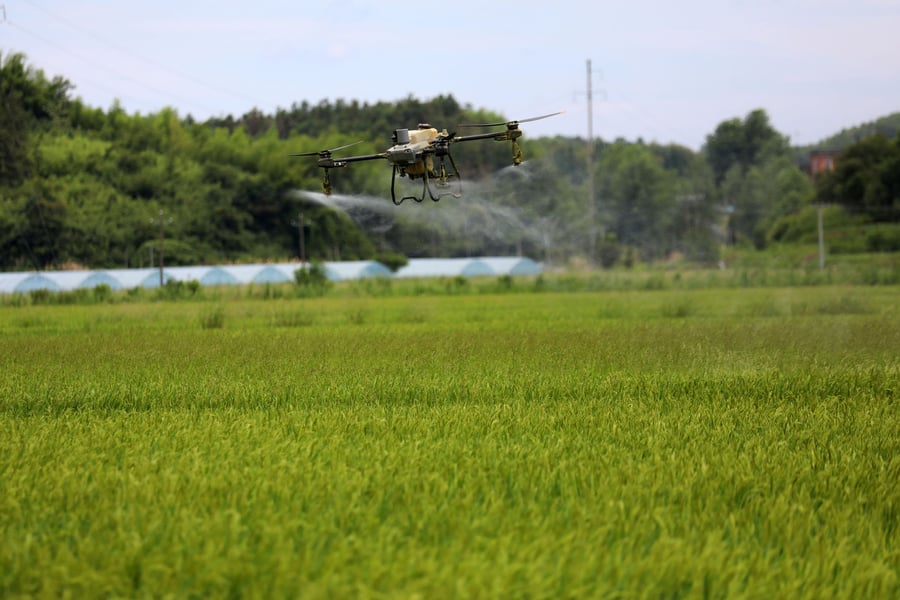
Agriculture
What BVLOS enables
Large-area spraying, seeding and crop analytics with heavier aircraft.
What the proposal would mean
Agriculture permits: fewer than 10 aircraft, up to 1,320 lb, Category 1 unless authorized, no dispensing directly over people and pesticide-label compliance. Certificates could operate up to Category 3. Part 137 would not apply to Part 108 operations.
Watch in the final rule
Weight and density limits for heavy spray aircraft.
Focus now
Role-based training, aircraft limits and maintenance for heavy aircraft.
Current + proposedFAQ
Part 108 FAQ
The questions pilots, program leaders and agencies ask us most. Proposed provisions are described as proposed; answers marked with a date depend on the rule’s current status.
Is Part 108 currently law?add
No. Part 108 is still a proposed rule. The FAA published the proposal on August 7, 2025, and sent its final rule to OIRA for review on July 10, 2026. There is no Part 108 in the Code of Federal Regulations yet. It becomes law only when the final rule is published and its requirements take effect. Follow the current stage in the Part 108 tracker.
verifiedCurrent as of Sep 25, 2026
When will Part 108 take effect?add
No date has been announced. Three dates matter, and they can differ:
Publication date — when the final rule appears in the Federal Register.
Effective date — when the rule legally takes effect, set in the rule itself.
Compliance dates — when specific requirements must be met, which can come later.
The 2025 proposal did not propose an effective date. Executive Order 14307 called for a final rule within 240 days of June 6, 2025; that target has passed. In September 2026, industry press reported an FAA official saying the agency aims to finish before the end of the year — useful context, not an announced date.
verifiedCurrent as of Sep 25, 2026
Does Part 108 replace Part 107?add
No. Part 107 remains the framework for visual-line-of-sight (VLOS) operations with small unmanned aircraft under 55 pounds, and the remote pilot certificate remains the credential for those operations. As proposed, Part 108 would become the path for routine BVLOS operations, and the FAA would stop issuing Part 107 waivers for BVLOS (proposed changes to §§ 107.1 and 107.205). Many pilots and organizations will work under both rules.
Can an individual obtain Part 108 authority?add
Possibly, as proposed. Part 108 applies to any “person,” which in FAA rules includes individuals as well as companies, and it places responsibility on the operator. The proposal includes a recreational permit for an individual flying one aircraft beyond visual line of sight — up to 55 pounds, in lower-density areas, within 10 nautical miles of the flight coordinator — with some organizational requirements waived. The commercial permits and certificates assume an operator with documented procedures, designated roles, and FAA-accepted aircraft. The final rule may change these pathways.
Will I take a Part 108 pilot exam?add
Not under the proposal. The NPRM would not create an FAA knowledge test or airman certificate for Part 108 personnel. The FAA would instead specify what training must cover — 19 general subject areas plus 12 specific to the aircraft make and model — and the operator would train and qualify its people, with recurrent training every 24 calendar months. Flight coordinators would also need at least 5 hours of experience on the specific make and model, and covered personnel would need a TSA security threat assessment. We’ll update this answer after the final rule.
verifiedCurrent as of Sep 25, 2026
Can a Part 107 pilot fly BVLOS today?add
Only with separate FAA authorization. A remote pilot certificate by itself requires visual line of sight (14 CFR 107.31). To fly BVLOS today, operators generally need a Part 107 waiver of § 107.31 (now requested through the FAA’s Aviation Safety Hub), a Section 44807 exemption, a Part 135 certificate for package delivery, or — for public agencies — a public aircraft COA or the FAA’s expedited public safety BVLOS waiver. See What is legal today?
verifiedCurrent as of Sep 25, 2026
Will my current drone qualify for Part 108?add
It depends on the final rule. As proposed, each aircraft would need FAA airworthiness acceptance, based on its manufacturer declaring compliance with an FAA-accepted consensus standard, and would have to meet design requirements such as the ability to avoid other aircraft, a safe predetermined action after lost link, flight data recording, cybersecurity protections, and Remote ID. Manufacturer eligibility would be limited to the U.S. and countries with a qualifying bilateral airworthiness agreement. Whether a specific model qualifies will depend on the final requirements and its manufacturer.
Will existing BVLOS waivers remain valid?add
The final rule’s transition provisions will control. In the proposal, the FAA said operations now conducted under waivers or exemptions would transition to Part 108 as those authorizations expire and a reasonable transition can occur, and that BVLOS operations under Part 135 would be expected to transition within a reasonable time after the rule takes effect. Operations that fall outside Part 108 could continue under their existing framework. We’ll update this answer when the final rule is published.
verifiedCurrent as of Sep 25, 2026
Can one person supervise multiple drones?add
The proposal allows it, with conditions. The default would be one aircraft per flight coordinator (1:1). Higher ratios would require a method acceptable to the FAA and could not exceed the ratio the manufacturer specifies. Certificate holders would also demonstrate higher ratios through FAA validation tests, and the FAA notes that coordinators would need the skills and training for one-to-many operations.
Will Part 108 eliminate drone pilot jobs?add
Not by design — it changes the work rather than removing people from it. Part 108 assumes highly automated aircraft without manual stick control, so work shifts from hand-flying toward supervising automated flights, planning routes, maintaining aircraft, managing data, and running safety programs. The proposal names roles such as operations supervisor, flight coordinator, maintenance, ground handling, and loading personnel, and Part 107 VLOS work continues alongside it. See the Drone Careers Guide for role outlooks.
What will Part 108 cost?add
There is no single figure. Costs depend on the aircraft, whether you need a permit or a certificate, the technology and data services the operation requires, staffing and training, and program maturity. The FAA’s 2025 regulatory analysis gives a sense of some pieces — for example, a safety management system for certificate holders at roughly $8,100–$41,180 one-time and $4,730–$42,580 per year, and a TSA security threat assessment enrollment fee of about $87 per person. These are proposal-stage estimates and may change.
Who has right-of-way under Part 108?add
As proposed, Part 108 drones would generally have right-of-way over crewed aircraft that are not electronically visible. They would have to yield to aircraft broadcasting their position with ADS-B Out or qualifying electronic conspicuity equipment and to aircraft taking off or landing at airports and heliports, and they would not have right-of-way in Class B or C airspace or over the densest (Category 5) areas. In shielded areas near infrastructure, drones would have right-of-way over all crewed aircraft. This was among the most-commented parts of the proposal and the FAA reopened comment on it in January 2026, so it may change.
verifiedCurrent as of Sep 25, 2026
How do I get trained for BVLOS and Part 108 roles?add
Train by role. As proposed, each operator would be responsible for training its people on FAA-specified subject areas, so choose standards-based training you can document. USI certifications map to the emerging roles: supervisors and safety leads — Advanced Unmanned Safety Level 1 (human factors) and Level 2 (safety management); BVLOS planners and flight coordinators — AUSO Ground and AUSO Flight; maintenance personnel — sUAS Safety Level 1 and Level 2. Training supports qualification; it does not by itself confer FAA authorization.
Sources & methodology
Sources, methodology and change log
fact_check
Written by USI Editorial Team, Unmanned Safety Institute. Technical review by Russ Winslow.
First published September 25, 2025 · Last substantive revision September 25, 2026 · Regulatory status last verified September 25, 2026.
“Last verified” means we rechecked the primary sources on that date. It does not mean the content changed — substantive revisions are dated separately and listed in the change log.
How we keep this guide accurate
Source hierarchy
Federal Register and official final-rule documents
FAA newsroom, fact sheets, advisory circulars and implementation guidance
OIRA / Reginfo regulatory review status
TSA notices and final security requirements
Industry standards organizations and standards referenced by the rule
Credible industry reporting — context only, never the sole source for legal status
Monitoring cadence
Weekly while review is pending: OIRA, FAA, Federal Register and TSA.
Same business day where practical for a material regulatory event: status, timeline, quick answers and change log.
Priority full review when the final rule publishes — technical and legal content.
As released: FAA guidance, advisory circulars, implementation dates and application instructions.
At least monthly when nothing changes: sources rechecked and the verified date refreshed.
label
How we label content
Current law is in effect today. Proposed comes from the August 2025 NPRM and is not law. Final will mark provisions confirmed by the published final rule. To be determined marks what no source has settled yet. Section references (§) point to the proposed rule text. The color bar along the right edge of each section shows the same thing at a glance: green for current law, orange for proposed, and a split bar where a section compares both.
Dated record of regulatory events and guide revisions, newest first.
Date
What changed
Why it matters
Guide update
Guide rebuilt as a live Part 108 tracker; status verifiedUSI Editorial Team
USI’s Part 108 guidance now lives in one continuously updated reference with a dated status, primary sources, and this change log. Sources checked: OIRA (final rule pending review), the Federal Register (no final rule), and the eCFR (no Part 108).
TSA announces BVLOS security technical roundtablesUSI Editorial Team
TSA confirmed it is finalizing companion security requirements with the FAA. Roundtables on model security-program language will follow publication of the final rules; requests to participate are due October 19, 2026.
Educational content, not legal advice. This guide explains a proposed federal rule and current FAA pathways in plain language. It is not legal advice, and USI is not the FAA or TSA. The final rule may differ materially from the proposal; confirm requirements against the official sources above and consult qualified counsel for decisions about your operation.
rocket_launchNext steps
Stay ahead of Part 108
Three ways to keep moving — starting with the one that costs nothing.
1 · Stay current
Get Part 108 updates
An email when the tracker records a material change — including publication of the final rule and its effective dates.
2 · Assess
Check your BVLOS readiness
Use the seven-dimension self-assessment and readiness checklist. No form, no gate — results stay in your browser.