
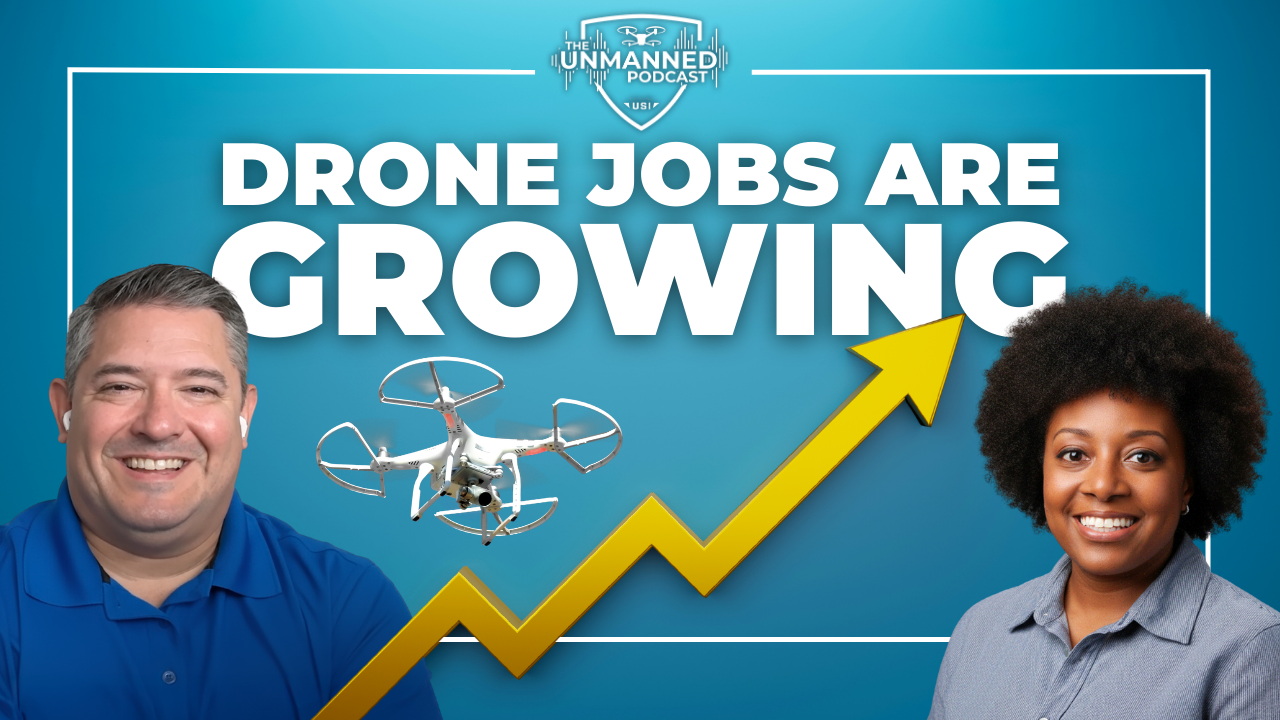
In this episode of The Unmanned Podcast, Matt Hernandez talks with Tonie Smith, lead drone instructor at National City Adult School, about her path into drones, her work in an early Drone as First Responder program, and how she now prepares adult students for real world careers in the UAS industry.
Q1: How did you go from business and operations into aviation and drone technology?
Tonie: Honestly, it was not planned at all. I was working in real estate operations and looking into becoming a home inspector. During my coursework, I saw a small note that said you could use a drone instead of climbing a 17 foot ladder to inspect roofs. I paused everything and thought why have I never considered this. That moment changed everything. I shifted gears, studied for my Part 107, and completely fell in love with the possibilities. I realized drones were not just gadgets. They were tools that could solve real problems.
Q2: You were also involved in the early Drone as First Responder program in Chula Vista. What was that experience like?
Tonie: It was incredible and intense at the same time. I came in pretty early when the program was still growing. We were supporting 911 calls and helping officers get real time situational awareness before they arrived on scene. I am not a sworn officer, so my role was fully focused on the technology. We monitored the systems, troubleshot issues, and made sure the drones were operating safely. Seeing how much safer and more efficient it made operations was eye opening.Q3: What made you transition from industry into teaching?
Tonie: Recruiting did. When I was hiring drone pilots, I realized many applicants had their Part 107 but were missing foundational knowledge. They did not fully understand airspace, risk assessment, or troubleshooting. I thought instead of hoping someone else trains them properly, why not help shape that foundation myself. When I discovered a local adult school had a drone program but no full-time instructor, it felt like the perfect solution. I could train the kind of pilots I would want to hire.
Q4: What makes your program different from basic Part 107 prep courses?
Tonie: We go beyond the test. The 107 is just the entry point. We focus heavily on risk management, pre flight planning, maintenance, and decision making. I want students to understand that flying is actually the smallest part of being a professional drone operator. It is about preparation, responsibility, and problem solving. We use scenario based learning so students work through real world situations instead of just memorizing information.
Q5: What kinds of careers are your students moving into?
Tonie: It varies a lot, which is exciting. Some have gone into Drone as First Responder programs. Others expand their own businesses using drones for inspections or agriculture. I have had students from fire agencies who needed their 107 for advancement. The beauty of drones is that they apply to so many industries. My goal is to give them a strong foundation and help them network so they can find the path that fits them best.
Q6: Looking ahead, what trends should new drone pilots be paying attention to?
Tonie: Regulatory changes are huge, especially discussions around Part 108 and expanded operations. Technology changes quickly too, especially with concerns about certain manufacturers. That is why we teach transferable skills. If students understand process, safety, and systems, they can adapt to any platform. The mindset and the fundamentals will always matter more than a specific piece of equipment.
Want more insights from industry experts?
Subscribe to The Unmanned Podcast and never miss an episode where we break down the latest in drone technology, regulations, and commercial operations.
Click Below to Watch the Full Episode
.png?width=711&height=400&name=Podcast%20Thumbnails%20%20(11).png "Podcast Thumbnails (11)")
.png?width=1280&height=720&name=Podcast%20Thumbnails%20%20(11).png "Podcast Thumbnails (11)")
.png?width=352&name=Mx%20Manager%20%26%20Instructor%20Role%20(1).png)