
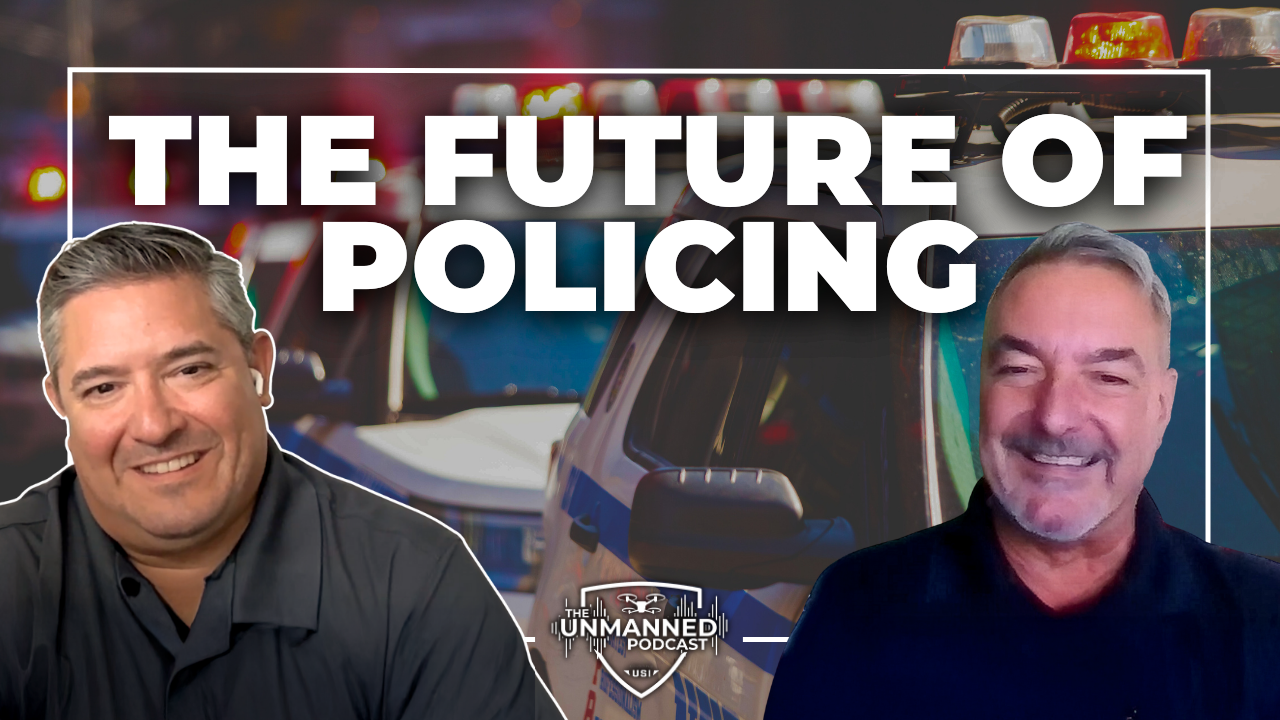
In this episode of The Unmanned Podcast, host Matt Hernandez sits down with Ron Leach, a former state trooper and aviation bureau leader, to discuss building and scaling public safety drone programs. They explore Drone as First Responder models, integrating UAS into manned aviation environments, managing airspace safety, and why applying traditional aviation standards to drone operations is critical for long term success.
Q1: How did you go from being a state trooper to flying helicopters and eventually building drone programs for public safety?
Ron: Honestly, I kind of fell into it. I did not grow up thinking I would be a state trooper or a pilot. After I got out of the Navy, I was volunteering as a firefighter and EMT. One night we had a bad car crash, and I saw a state police helicopter come in to pick up a patient. I had no idea that even existed and I thought that looks like a really cool job. So I shifted from the fire side to the police side, went through the academy, and eventually worked my way into the aviation bureau. I flew everything from medevac to transporting the governor. About 15 years in, I was asked to help with some projects and one of them was standing up a drone program around 2015 when drones were just starting to gain traction in public safety.
Q2: When you look at helicopters versus drones, where do you see drones outperforming and where do helicopters still make sense?
Ron: Drones are incredible for getting eyes on a scene immediately. If you have an officer with a drone in the trunk, they can launch it right away instead of waiting for a helicopter crew to spin up and respond. That cuts down response time and can change how a situation unfolds. Helicopters still have their place. Drones cannot transport people and they have limitations. But drones fill a gap. They are a void filler. I tell people it is easier to name what drones cannot do than what they can do. They are a natural fit alongside manned aviation, not a replacement.Q3: When you were building out the drone program, what were the first steps?
Ron: We treated it like aviation from day one. We put together a working group with different units including corrections, forest fire, transportation, marine units and troopers from the road. We built policies, procedures, pilot selection standards and equipment lists. We did not want every unit buying whatever they wanted. We created a menu of approved platforms and said pick what fits your mission. We also focused on accountability. We needed a central place to house documentation so if leadership or legislators had questions, we had answers.
Q4: What are your thoughts on drones as a first responder program?
Ron: I give a lot of credit to Chula Vista. They did it the right way. Drone as a first responder means launching a drone as soon as a call comes in and getting eyes on the situation before officers arrive. That can change everything. It can deescalate a situation or give officers critical information. That said, I am a big believer in crawl walk run. You cannot go from zero to a fully built program in 90 days and think you understand aviation risk. These are aircraft. They fail sometimes. You need the right training and mindset before you press that launch button.
Q5: From a police safety standpoint, where do drones make the biggest impact?
Ron: Force protection is huge. There was a case where a call came in about a man with a gun. A drone got overhead and showed it was actually a lighter. That kind of information can shift how officers approach a scene. Drones also help with barricaded subjects, water rescues and searching dangerous terrain. You are reducing exposure for officers and even for helicopter crews. The applications are almost limitless.
Q6: Before we close, what stood out to you about USI?
Ron: What impressed me was how USI aligns drone training with full scale aviation standards. When you think about organizations like FlightSafety or CAE certifying professional pilots, that is the mindset. You are saying if you meet these standards, we stand behind that training. That level of professionalism is needed in the drone space and not many are doing it.
Want more insights from industry experts?
Subscribe to The Unmanned Podcast and never miss an episode where we break down the latest in drone technology, regulations, and commercial operations.
Click Below to Watch the Full Episode
.png?width=711&height=400&name=Podcast%20Thumbnails%20%20(10).png "Podcast Thumbnails (10)")
.png?width=1280&height=720&name=Podcast%20Thumbnails%20%20(10).png "Podcast Thumbnails (10)")