.jpg?width=1766&height=993&name=Drones%2c%20Parachutes%2c%20%26%20Public%20Safety%20(revision).jpg "Drones, Parachutes, & Public Safety (revision)")
.jpg?width=1920&height=1080&name=Drones%2c%20Parachutes%2c%20%26%20Public%20Safety%20(revision).jpg "Drones, Parachutes, & Public Safety (revision)")
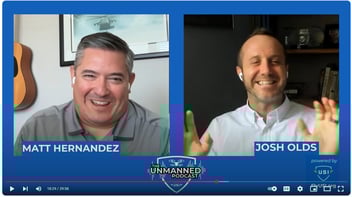
In Episode 4 of the Unmanned Podcast, USI’s Matt Hernandez talks with Kyle Miller of Censys Technologies about BVLOS flight, upcoming FAA regulations, evolving drone tech, and how manufacturers and training organizations are preparing for Part 108.
Q: For our audience who might not be familiar with what BVLOS or VLOS is, can you briefly discuss the differences between those two modes of flight and what that means for daily operations in the drone industry?
Kyle: Under Part 107, the remote pilot must be able to continuously determine the aircraft’s attitude and orientation. If you can do that visually, you’re operating within VLOS. In most situations, that’s about a one-mile radius. But when you’re flying fixed-wing aircraft designed to cover long distances, one mile just isn’t efficient. That’s where BVLOS comes in — operating outside visual line of sight. It enables long-range, high-value missions, and it’s why we shifted our focus to fully supporting BVLOS operations for the infrastructure market
Q: What kinds of organizations are getting the most value out of BVLOS operations right now?
Kyle: Linear infrastructure operators — utilities, energy companies, and transportation organizations — see the biggest gains. They need to inspect long corridors of assets, sometimes hundreds of miles. Doing that with VLOS takes dozens of teams and a lot of time. BVLOS consolidates that down to fewer operators, longer flights, and a much stronger return on investment. It transforms inspections from reactive to proactive.
Q: From a regulatory perspective, what’s changing that makes BVLOS more accessible today than it was even a couple of years ago?
Kyle: We’re finally seeing clarity around what’s required to fly safely and consistently beyond visual line of sight. Detect-and-avoid tech has matured, remote ID is in place, and the FAA is more open to standardized waivers. It’s not the Wild West anymore — there’s a pathway, and organizations that follow it are getting approvals faster and with fewer unknowns.
Q: What are the biggest misconceptions organizations have when they first explore BVLOS operations?
Kyle: Most people think BVLOS is primarily a hardware challenge — longer range, better antennas, bigger batteries. But the real challenge is operational design: training, safety cases, airspace understanding, and proving you can maintain aircraft control without visual reference. Once teams realize it’s about the whole ecosystem, not just the aircraft, they make better decisions and scale much faster.
Q: When you talk to companies trying to scale their drone program, what’s the advice you find yourself giving most often?
Kyle: Start with the mission, not the drone. Define what data you need, how often you need it, what the operational environment looks like, and how far you need to fly. Once you map that out, the technology and regulatory path become clear. Teams that skip this step end up buying hardware that can’t support their goals. The ones that get it right build scalable, repeatable BVLOS programs that deliver real value.
Q: Can you give an example of a real-world BVLOS mission that’s made a tangible impact?
Kyle: One of my favorite examples is a county in Florida that manages 18 miles of coastline. After hurricanes, they need sand surveys to secure state funding for beach replenishment. Historically, it took months to gather data. With BVLOS using the Sentaero, they can complete the survey in a single 45-minute flight. That’s not just faster — it saves time, money, and ensures beaches are restored safely and efficiently.
Want more insights from industry experts?- Subscribe to The Unmanned Podcast and never miss an episode where we break down the latest in drone technology, regulations, and commercial operations.
Click Below to Watch the Full Episode